VenaSeal

VenaSeal is a minimally invasive treatment that uses a medical adhesive to close certain diseased veins. It is designed to treat problematic superficial veins associated with venous reflux and varicose veins.

Unlike thermal ablation, VenaSeal does not rely on heat to close the treated vein. Your provider determines whether this treatment is appropriate based on your vein anatomy and symptoms.

How Does It Work?

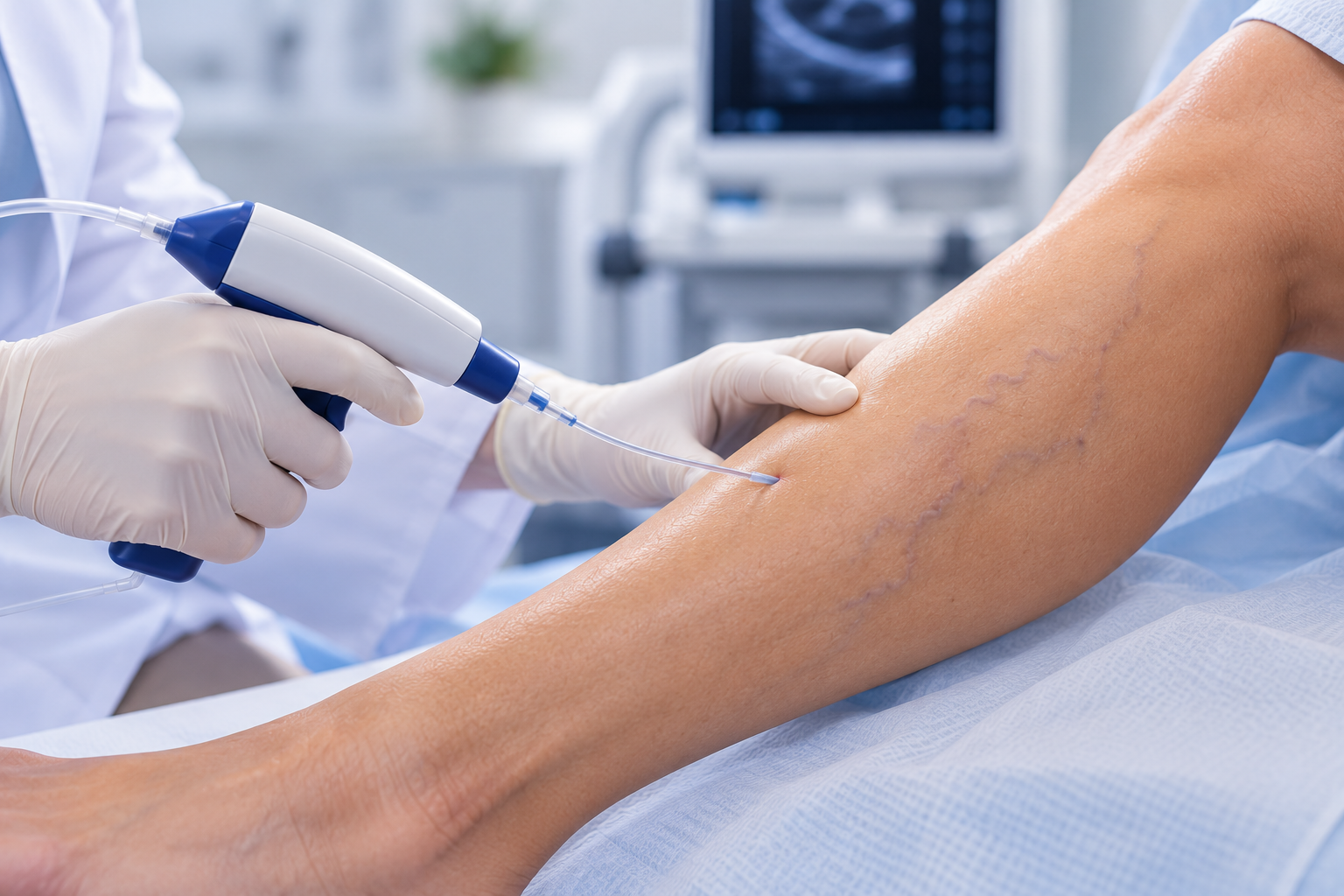
Ultrasound is used to identify the vein being treated. A small catheter is guided into the targeted vein through a small access point.

A medical adhesive is delivered at carefully selected points along the vein. The adhesive closes the vein and stops abnormal blood flow through that vessel. Blood is then redirected through healthier veins in the leg.

Frequently Asked Questions

What is VenaSeal used for?

VenaSeal is used to close certain superficial veins affected by venous reflux. It may be considered for patients with symptomatic varicose veins.

The procedure is minimally invasive and uses adhesive rather than thermal energy. Your provider will determine whether it matches your individual vein condition.

Does VenaSeal use heat?

No. VenaSeal uses a medical adhesive rather than laser or radiofrequency energy.The adhesive is delivered through a catheter into the targeted vein. This distinguishes it from thermal ablation techniques. Your provider can explain the differences between available treatment options.

What happens to the treated vein?

The adhesive causes the targeted vein to close. Blood is redirected through other healthy veins.The body gradually processes the treated vessel over time. This approach is intended to reduce abnormal blood flow through the diseased vein.

Is VenaSeal minimally invasive?

Yes, treatment is performed through a small catheter access point. It does not require traditional surgical removal of the vein.

Ultrasound is used to help guide catheter placement. Your provider will explain the expected recovery and follow-up process.

How do I know if VenaSeal is right for me?

The best procedure depends on the anatomy and severity of your venous disease. Your provider may perform an ultrasound to identify reflux and determine which veins are involved.

Other options may include laser ablation, RF ablation, sclerotherapy, or microphlebectomy. A personalized evaluation helps determine the most appropriate treatment.