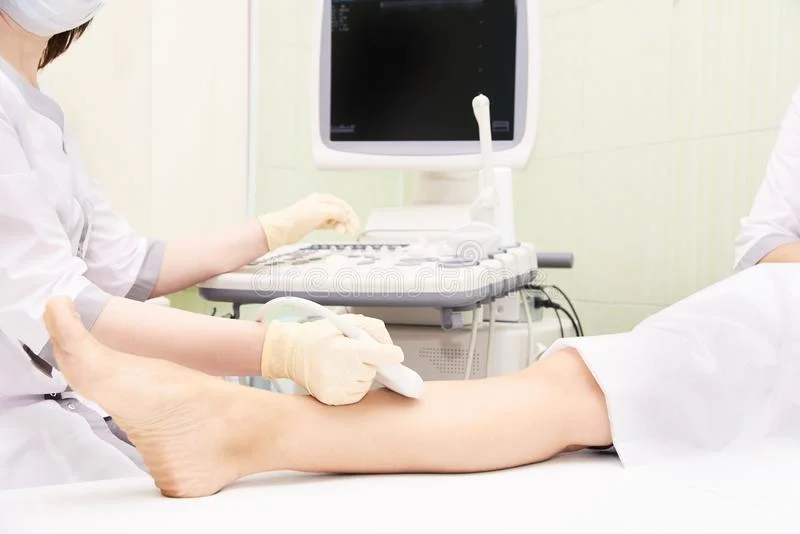
Vascular ultrasound is a noninvasive imaging test used to evaluate blood flow through veins and arteries. It uses sound waves to create images of blood vessels and can help identify narrowing, blockages, blood clots, or abnormal blood flow.
The examination does not require an incision and generally does not involve radiation. Vascular ultrasound can provide important information for diagnosing and planning treatment for vascular conditions.

A trained ultrasound technician applies gel to the skin over the blood vessel being examined. A handheld transducer is moved across the skin to create images of the vessels.
Doppler ultrasound can measure the direction and speed of blood flow. The resulting information helps identify abnormalities in circulation. Your provider uses the findings along with your symptoms and medical history to determine the next steps.
Vascular ultrasound can evaluate blood flow through arteries and veins. It can help identify narrowing, obstruction, abnormal blood flow, and certain blood clots.
It may also be used to evaluate veins before or after certain treatments. The exact information obtained depends on the type of ultrasound performed.
Vascular ultrasound is noninvasive and does not use ionizing radiation. It uses sound waves to create images and evaluate blood flow. The test is generally well tolerated. Your provider can explain any specific preparation required for your examination.
Most vascular ultrasound examinations are painless. You may feel mild pressure as the technician moves the transducer over the area being examined.
Some examinations may require additional pressure to obtain clear images. Tell the technician if you experience discomfort during the examination.
The duration depends on which blood vessels are being examined. A focused study may be relatively brief, while a more detailed examination can take longer. Your technician will explain the process when you arrive. You will generally be able to return to your normal activities afterward.
Ultrasound can provide important information about the location and severity of vascular disease. For vein treatment, it can identify refluxing or abnormal veins.
For arterial disease, it can help evaluate blood flow and areas of narrowing. These findings help your physician select and plan the most appropriate treatment.