

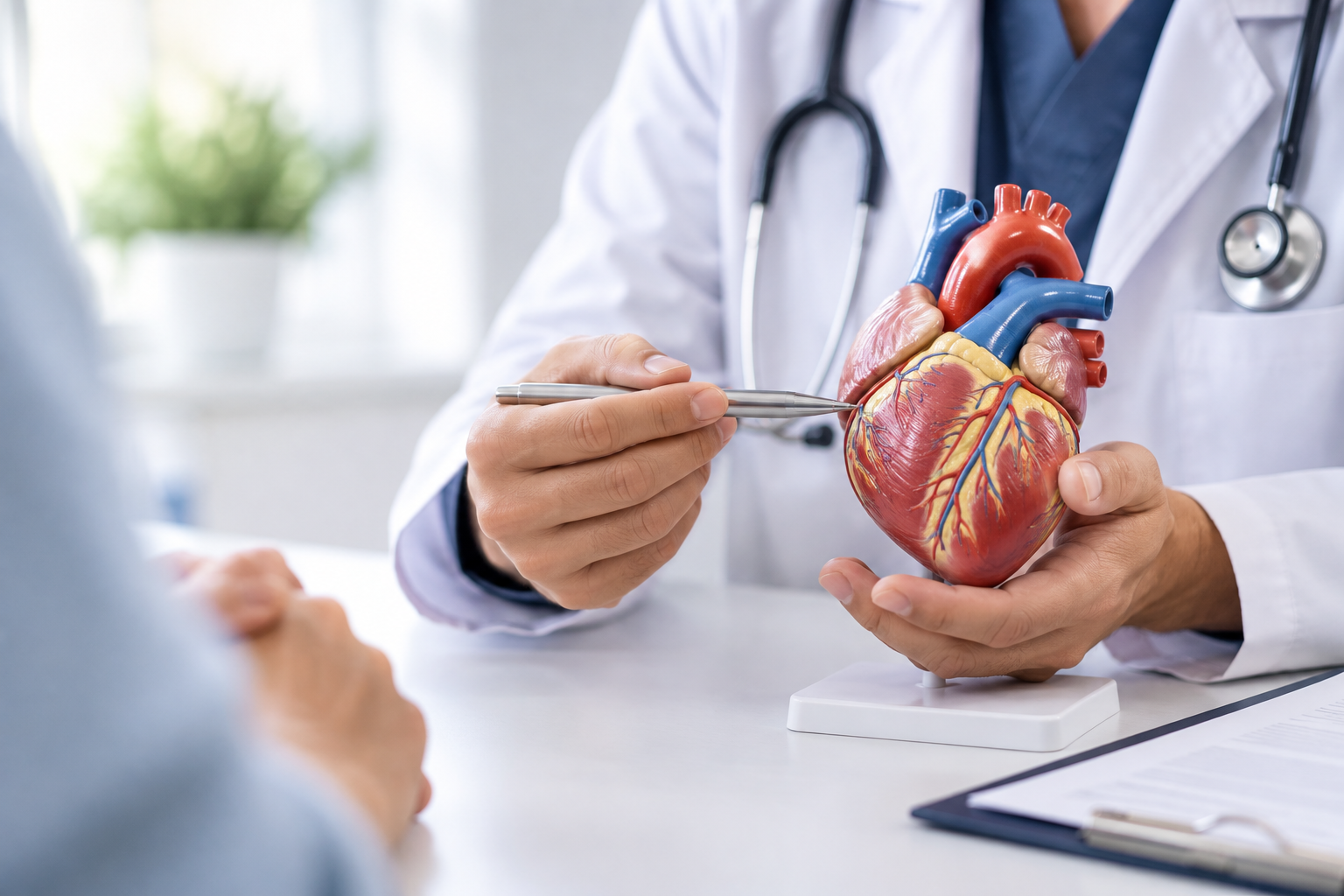
Heart and cardiovascular procedures begin with a comprehensive evaluation of your symptoms and medical history. Diagnostic tests such as echocardiograms, nuclear stress testing, and vascular ultrasound can provide important information about your cardiovascular health. When treatment is necessary, specialized catheters may be used to access the heart or affected blood vessels. Depending on the condition, treatment may involve balloon angioplasty, stent placement, atherectomy, or pacemaker implantation. Your physician will explain the recommended procedure, potential risks, recovery process, and follow-up care.
Heart procedures can include diagnostic testing and treatments for various cardiovascular conditions. Services may include heart catheterization, balloon angioplasty, coronary atherectomy, and pacemaker implantation, along with diagnostic tests such as nuclear stress testing and echocardiograms.
Your physician will recommend the most appropriate procedure based on your symptoms, medical history, and diagnostic findings. The goal is to accurately evaluate your cardiovascular health and provide appropriate treatment when needed.
Heart catheterization may be recommended when your physician needs detailed information about your heart or coronary arteries. The procedure can help identify narrowed or blocked arteries and evaluate blood flow to better understand your cardiovascular condition.
In certain cases, treatment such as angioplasty or stent placement can be performed during the same procedure. Your provider will determine whether heart catheterization is appropriate based on your symptoms, test results, and overall health.
Diagnostic tests are used to gather information about how your heart and blood vessels are functioning. Examples include echocardiograms, nuclear stress tests, and vascular ultrasound examinations, which can help identify or evaluate cardiovascular problems.
Treatment procedures are designed to address an identified condition, such as an arterial blockage. Your physician may recommend one or several diagnostic tests before determining whether monitoring, medication, or an interventional procedure is appropriate.
Several cardiovascular procedures can be performed using minimally invasive catheter-based techniques. A small catheter can be guided through a blood vessel to reach the heart or an affected artery, which may reduce the need for traditional open surgery.
Depending on the condition, the physician may perform angioplasty, place a stent, or use specialized treatment devices. The exact approach, recovery time, and follow-up requirements will depend on the procedure and your individual health.
The right procedure depends on your symptoms, cardiovascular condition, diagnostic results, and overall health. Your physician may first recommend imaging or functional testing to better understand your condition and determine the appropriate course of care.
Based on the results, your physician can determine whether monitoring, medication, additional testing, or an interventional procedure is appropriate. Your care team will explain the recommended treatment, potential benefits, risks, and recovery process.
Evaluate heart and coronary artery health using minimally invasive catheterization to identify blockages and circulation problems.
Treat difficult coronary artery plaque using specialized catheter techniques designed to improve blood flow and vessel access.
Restore reliable heart rhythm with pacemaker implantation designed to support patients with certain slow or abnormal heartbeats.
Evaluate heart blood flow during stress using advanced nuclear imaging to identify potential coronary artery problems.
Examine heart structure, valves, chambers, and pumping function using safe, noninvasive ultrasound imaging technology.
Evaluate blood flow, blockages, narrowing, and vascular conditions using safe, noninvasive ultrasound imaging technology.
Protect threatened limbs by addressing poor circulation, wounds, and vascular disease through personalized treatment strategies.
Improve circulation in narrowed peripheral arteries using minimally invasive catheter-based treatments tailored to individual vascular conditions.
Improve blood flow through narrowed arteries using balloon angioplasty and stent placement when medically appropriate.