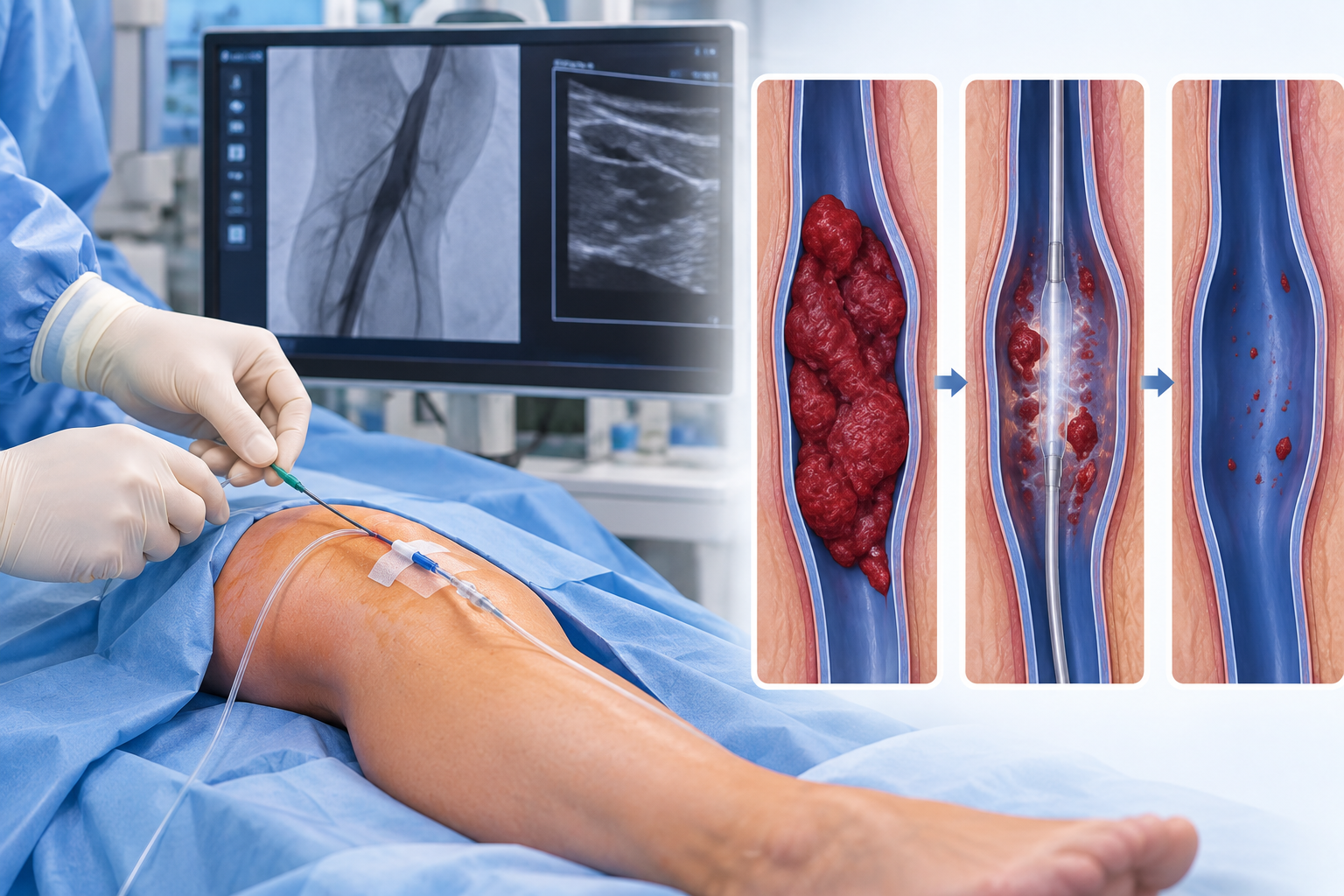
Thrombolysis for DVT Management

Thrombolysis is a catheter-based treatment that may be considered for selected patients with deep vein thrombosis, or DVT. The procedure uses clot-dissolving medication to help break down a blood clot within a vein.

It is generally reserved for specific situations where active clot treatment may provide important benefits. Your physician evaluates the location, severity, timing, symptoms, and potential risks before recommending thrombolysis.


How Does It Work?

A thin catheter is guided through the blood vessels toward the location of the clot. Imaging helps the provider accurately position the catheter within or near the affected area.

A thrombolytic medication is delivered through the catheter to help dissolve the clot. In selected cases, additional catheter-based techniques may be used to restore blood flow. Because thrombolytic therapy can increase bleeding risk, careful patient selection and monitoring are essential.

Frequently Asked Questions

What is DVT thrombolysis?

DVT thrombolysis is a treatment designed to actively dissolve certain blood clots in deep veins. It is different from simply using anticoagulant medication to prevent a clot from growing.

A catheter can deliver medication directly toward the affected area. Not every patient with DVT is a candidate for thrombolysis.

Why might thrombolysis be recommended?

The treatment may be considered in selected patients with significant or extensive DVT. The goal is to restore venous blood flow and potentially reduce complications from the clot.

The potential benefits must be weighed against risks, particularly bleeding. Your physician will determine whether the procedure is appropriate for your situation.

Is thrombolysis the same as taking a blood thinner?

No. Anticoagulants primarily help prevent clots from growing and new clots from forming.Thrombolytic medications are designed to actively break down existing clots. The two approaches have different purposes and may sometimes be used as part of a broader treatment plan. Your physician will determine which therapies are appropriate.

What are the risks of thrombolysis?

The most important concern with thrombolytic medication is bleeding. Other risks depend on the catheter procedure, the location of the clot, and your overall health.

Your medical team will evaluate factors such as medications and bleeding history before treatment. The potential benefits and risks should always be discussed with your physician.

What happens after treatment?

Your medical team will monitor you after the procedure and provide instructions for recovery. Additional medications, including anticoagulants, may be recommended depending on your condition.

Follow-up imaging may be used to evaluate the treated vein when appropriate. Seek urgent medical attention for new chest pain, difficulty breathing, or other concerning symptoms.