Varithena

Varithena

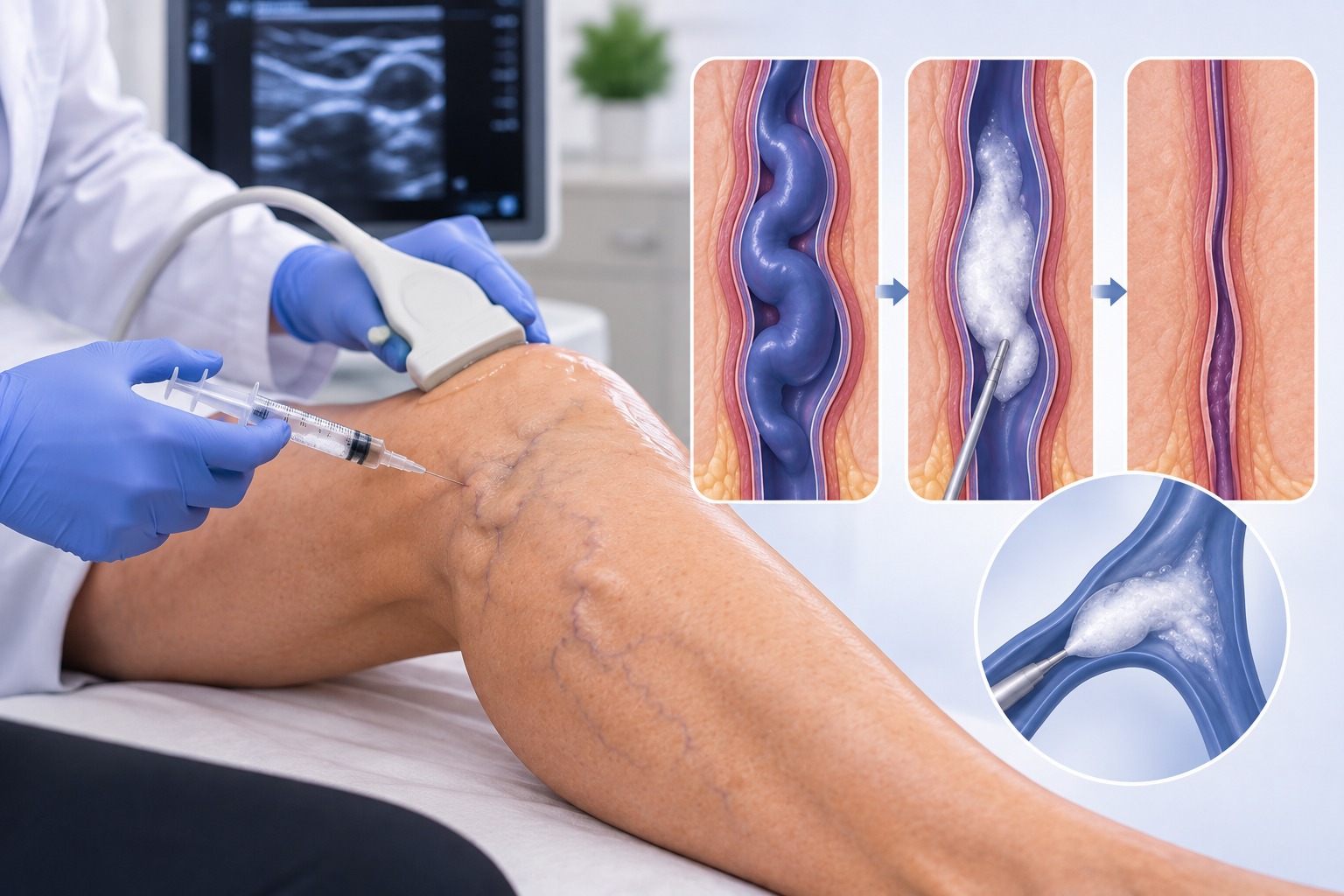
Varithena is a prescription injectable foam treatment used to treat certain incompetent veins associated with varicose veins. It provides a minimally invasive option for patients who may benefit from chemical closure of problematic veins.

The treatment is performed using ultrasound guidance to help accurately access and treat the targeted vein. Your provider determines whether Varithena is appropriate based on your vein anatomy, symptoms, and overall health.

How Does It Work?

The provider first uses ultrasound to locate the vein being treated. A small catheter or needle is used to access the targeted vein. Varithena foam is introduced into the vein, where it contacts the vein wall.

The treated vein closes, reducing abnormal blood flow through that vessel. Your body gradually processes the treated vein while circulation is redirected through healthier veins.

Frequently Asked Questions

What is Varithena used to treat?

Varithena is used to treat certain incompetent veins associated with varicose veins. It is designed to close problematic veins without traditional surgical vein removal.

The appropriate treatment depends on the location and characteristics of the affected veins. An ultrasound evaluation can help your provider determine whether it is suitable.

Is Varithena a surgical procedure?

Varithena is a minimally invasive injectable treatment rather than traditional open surgery. Access to the vein is obtained through a small needle or catheter.

The medication is delivered directly into the targeted vein. Your provider will explain the expected recovery and activity instructions after treatment.

How does the foam close the vein?

The foam comes into contact with the inside lining of the targeted vein. This causes the vein to close and prevents normal blood flow through that unhealthy vessel.

The body gradually processes the treated vein. Healthy veins continue carrying blood back toward the heart.

How is Varithena different from laser treatment?

Varithena uses an injectable medication, while laser treatment uses thermal energy. Both approaches are designed to close problematic veins and redirect blood flow.

The best option depends on your vein anatomy and clinical findings. Your provider can compare the available treatments during your evaluation.

Will I need follow-up after Varithena?

Follow-up is important after treatment to evaluate the treated vein and your recovery. Your provider may use ultrasound or other assessments depending on your situation.

You will receive instructions regarding activity, compression, and warning signs. Always follow the individualized recommendations provided by your medical team.