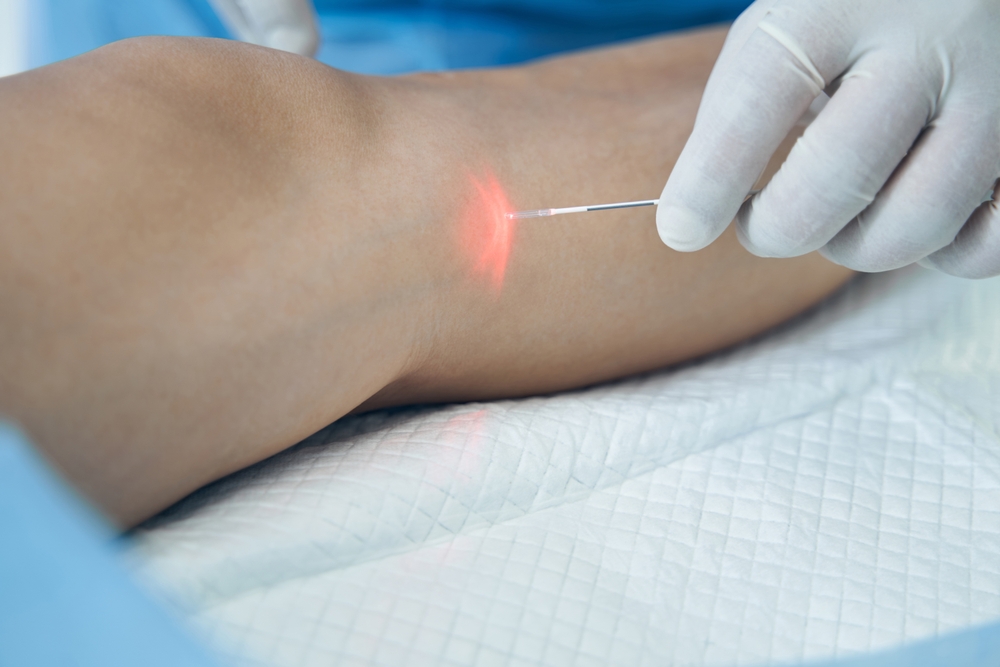
Endovenous Laser Treatment, also called EVLT, is a minimally invasive treatment for varicose veins caused by an unhealthy or malfunctioning vein. The procedure uses laser energy to close the targeted vein and redirect blood flow into healthier veins.
It is commonly performed as an outpatient procedure and generally requires only a small access point. EVLT can help address symptoms associated with venous insufficiency, including aching, heaviness, swelling, and visible varicose veins.
A healthcare provider uses ultrasound to identify the vein that is causing the problem. A thin catheter is inserted into the vein through a small access point in the skin. Laser energy is delivered through the catheter, creating controlled heat that causes the vein to close.
Blood is naturally redirected through healthier veins, while the treated vein is gradually absorbed by the body. Your provider will determine whether EVLT is appropriate based on your symptoms, examination, and ultrasound findings.
EVLT is primarily used to treat certain varicose veins caused by venous reflux. It may help reduce symptoms such as aching, heaviness, swelling, or discomfort.
The treatment targets the underlying unhealthy vein rather than simply treating its appearance. An ultrasound examination helps determine whether EVLT is an appropriate option.
Most patients receive local anesthetic around the treatment area. You may feel pressure or mild sensations during different parts of the procedure.
The treatment is designed to avoid the need for a large surgical incision. Your provider will explain what you can expect based on your individual treatment plan.
EVLT is generally performed as an outpatient procedure and can often be completed in less than an hour. The exact treatment time depends on the number and location of veins being treated.
Ultrasound guidance helps the provider accurately target the affected vein. Your provider will give you specific instructions about activity and follow-up afterward.
The laser energy closes the unhealthy vein so blood can no longer flow through it normally. Your body gradually breaks down and absorbs the treated vein over time.
Blood is redirected through other healthy veins in the leg. This is why closing a problematic superficial vein does not prevent normal circulation.
Not necessarily. Varicose veins can have different underlying causes and patterns of venous reflux. Your provider may perform an ultrasound to evaluate your veins before recommending treatment.
Depending on your condition, other options such as sclerotherapy or microphlebectomy may be considered. The recommended treatment should be individualized to your vein anatomy and symptoms.